

By mentioning the date, we can easily track when that particular good was sold. Empowering students and professionals with clear and concise explanations for a better understanding of financial terms. An invoice is a document sent by a seller to a buyer, indicating the products, quantities, and agreed prices for goods or services the seller has provided to the buyer. My Accounting Course is a world-class educational resource developed by experts to simplify accounting, finance, & investment analysis topics, so students and professionals can learn and propel their careers.
Supplier
In this journal entry, we debit the costs of purchasing goods directly to the inventory account because, under the perpetual inventory system, we need to update the balance of the inventory account perpetually. This means that when we purchase the inventory goods in, we need to record it as an increase in the inventory account immediately. It is also known as a Purchase journal, Invoice book or Purchase daybook. A purchase book is a special-purpose subsidiary book prepared by a business to record all credit purchases.
What information is usually found in Purchase Journals?
It also facilitates expenditure control and inventory management, which in turn can generate cost savings. In addition, it provides insight into supplier performance and assists in making strategic purchasing decisions. Purchase Journals are accounting records which are used to document and track all the transactions where the business purchases items on credit.

What is an Example of a Purchases Journal Entry?
- From the above picture, we can see that the fifth (5th) Column is a Folio column and is empty.
- Let us discuss what are the general and special journals, how do they work, and their key differences.
- It is also clear from the name that sales journal records sale transactions, whereas purchase journals record purchase transactions.
- Both parties agree to a price that the purchaser pays in consideration of goods or services.
In other words, goods are the commodities that are purchased and sold in a business on a daily basis. Goods are denoted as ‘Purchases A/c’ when goods are purchased and ‘Sales A/c’ when they are sold. Purchase Journals usually contain information like date of the unearned revenue transaction, name of the supplier, invoice number, description of the item, quantity of the item, cost of the item, and any applicable taxes or discounts.
Example of Journal Entry for Purchase
Business owners in Singapore will discover concrete information to improve their financial management. Similarly, purchase journals are used to record the purchases of a company. Cash payment journals record the cash payments made by the clients of a company. Sales journals record sales and some other particular metrics related to sales.
- This journal helps in monitoring liabilities and ensures proper tracking of purchases made from suppliers.
- In addition, the purchase notebook arranges entries by supplier or creditor, making it easier to track outstanding bills.
- A special journal is created for specific accounts by some businesses when they require detailed records.
- They are significant in maintaining accurate and organized accounts, aiding in tracing any transaction back to its source at any given time.
- This journal entry is a bit different from the merchandise purchased on credit.
- Whether you’re recording a straightforward sale or handling complex returns, every accounting entry tells part of your company’s financial story.
- Debiting the asset account ensures that the purchase is accurately recorded and reflects the addition of goods or services to the company’s resources.
Each client is given a certain number and the same number, post law firm chart of accounts reference is different from the account debited, as this does not contain the amount of money for a particular order from the client. Sometimes, the entity also includes other information related to purchasing like fixed assets, inventories, or expenses. Usually, debits have a left alignment in the entry field while credits are indented or aligned with the right side of the line. This is an easy method for quickly identifying which transactions are deposits, and which ones are withdrawals. Naturally, in small businesses, where the workforce is very limited all these control checks can not be established. However, still, it shall be ensured that the person authorized to make payments shall be separate from the person who ordered the goods.
- This article delves into the history, types, key events, and the importance of the Purchases Journal, alongside practical examples and related terms.
- To help illustrate this further, let’s look at a purchase journal example.
- This process holds immense significance as accurate posting to the General Ledger is crucial for maintaining the financial integrity of an organization.
- Therefore, ABC Co issues a debit memorandum and returns such goods back to its supplier with a value of $100.
- The Purchases Journal is an essential tool for accurate financial reporting and analysis.
- That in turn, offers necessary data for the preparation of financial statements.
- Both are important to maintain correct and complete financial records of a business.
Typical Purchase Transaction Journal Entries

In this example, all the items are assumed to be inventory purchases and some information what is a purchases journal has been omitted to simplify the example. Businesses with lower quantities of daily transactions may choose to keep a single purchase daybook. However, in order to accurately classify all the expenses, it is important that each type of credit purchase is recorded separately. We may by mistake post the same cash purchase from the cash book and Purchase book if cash purchase is recorded in Purchase Journal resulting in an overstatement of Purchases. To avoid this duplication, only credit purchases are recorded in Purchase Journal.
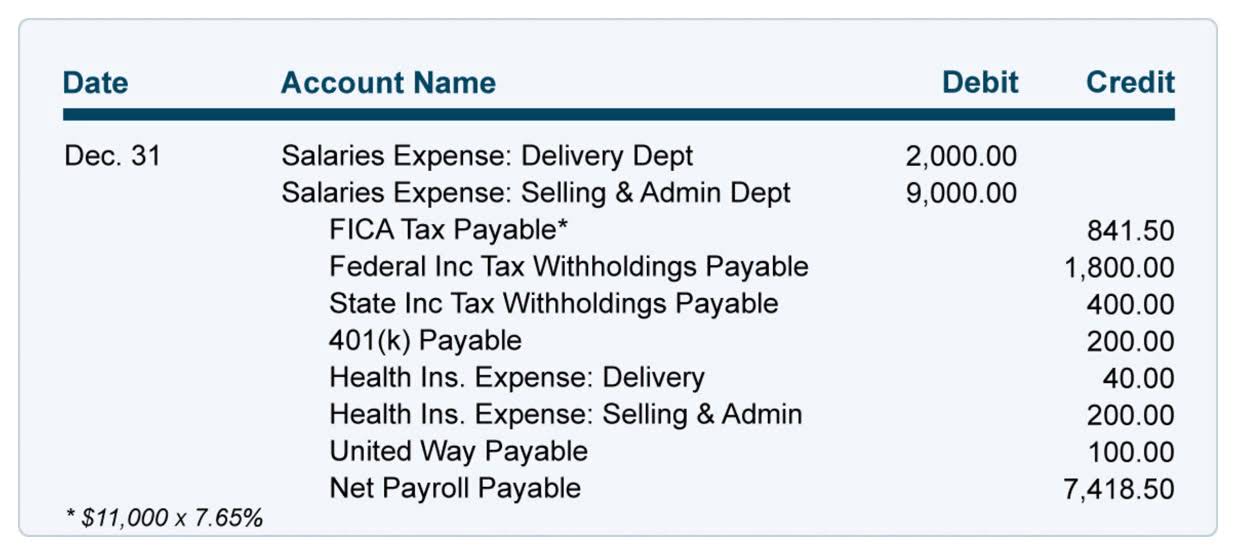
This information is crucial for accurately recording financial transactions within a business. The date of purchase ensures that the transaction is properly timed, while the vendor name and invoice number provide specific identification. The description of items acquired details the nature of the purchase, and the purchase amount reflects the monetary value involved.